
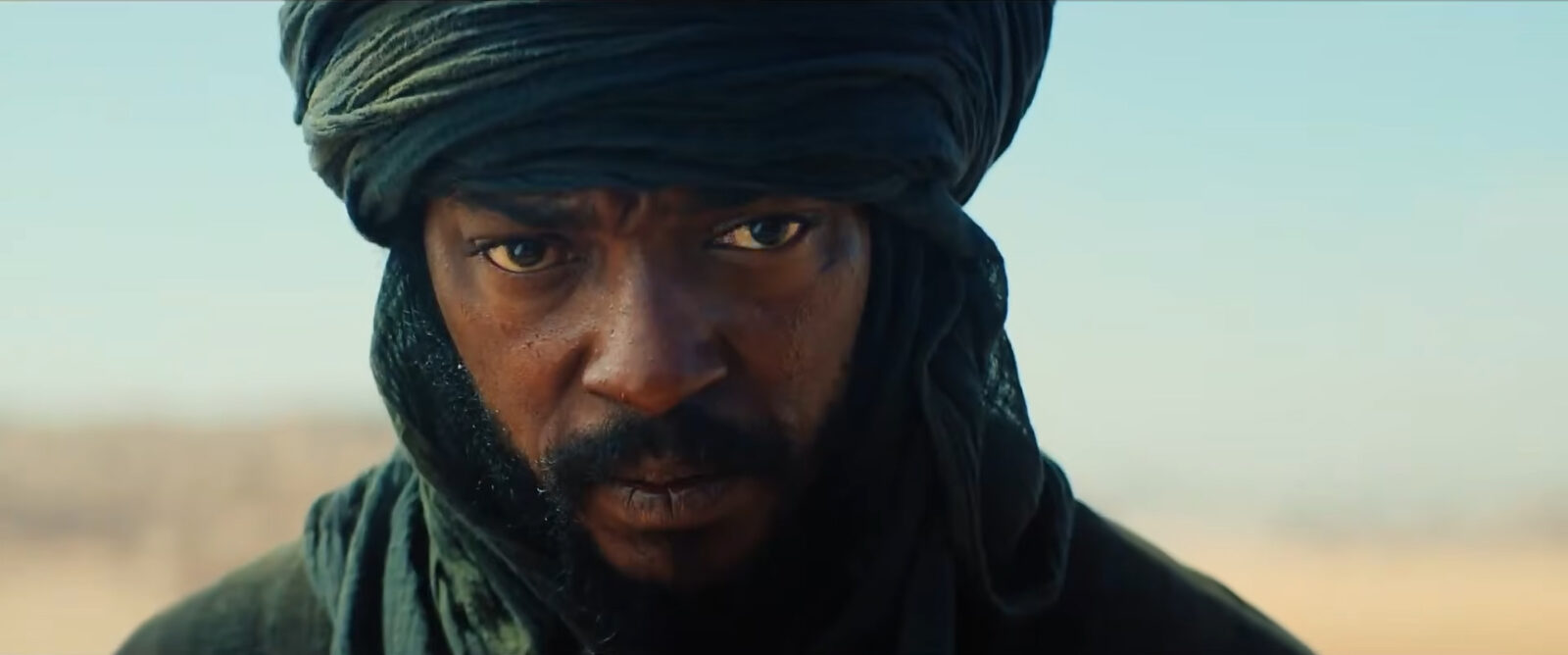

Set against stunning real desert landscapes with impressive scale and colour, Desert Warrior (2025) looks undeniably grand and occasionally engaging, but its thin script, shallow characters, and oddly detached cultural voice make it hard to care about anything beyond the visuals.
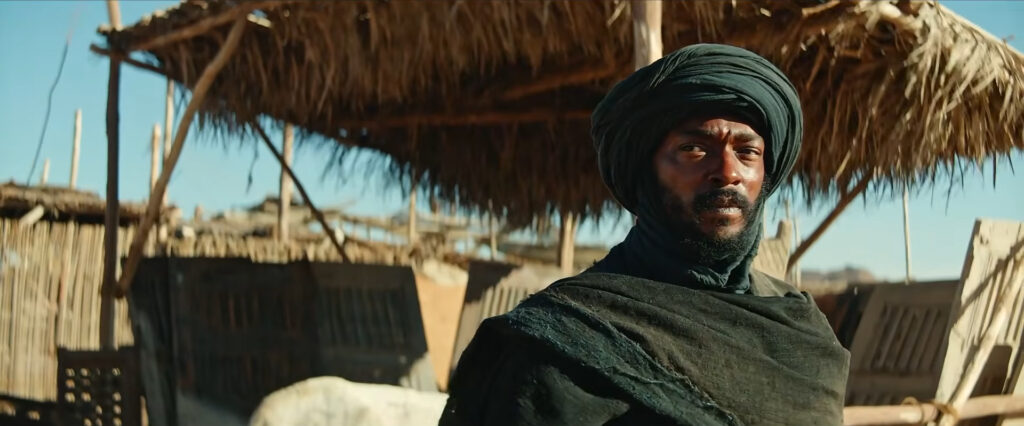
Directed by Rupert Wyatt and written by David Self and Erica Beeney, Desert Warrior is, in essence, a component of Saudi Arabia’s Vision 2030 initiative. You might recall Vision 2030 through NEOM—the bizarre, almost surreal project that aims to construct a 25-kilometer-long linear city in the middle of the desert. The film was shot in the very region where this project is taking shape, and it exists as part of Saudi Arabia’s broader ambition to build its own Hollywood.
Nearly $150 million has reportedly been spent on the production. Filming began in 2021, yet it took five years for the film to reach theaters, delayed by a variety of factors—including the war that followed the October 7 attacks.
For anyone unfamiliar with the Vision 2030 project, here’s a brief YouTube video that explains the plan…
At this point, it should already be clear: this is not a project driven by cinema or artistic intent. It is a state project, one that serves a purpose closer to tourism than to filmmaking. In fact, if NEOM is a “project,” then Desert Warrior is also one. Watching the film, you might find yourself asking: Was this script written by migrant construction workers who came from India or Pakistan to Saudi Arabia, working under low wages and harsh conditions? That’s how alien the film feels to the culture it claims to represent. The reason is simple—despite being a Saudi production, the film is made entirely by Americans. That alone says a great deal.
Outsourcing the telling of your own culture to outsiders is, for me, the single most alienating aspect of this film. One can’t help but think that with even half of the money and effort spent here, supporting young Saudi filmmakers could have resulted in a far more authentic and compelling work—one that genuinely reflects the country’s culture. Instead, Desert Warrior feels like a film shaped by a narrow vision that sees cinema the same way it sees construction: as something to be built, not created. And for that reason, it ultimately fails as a film.
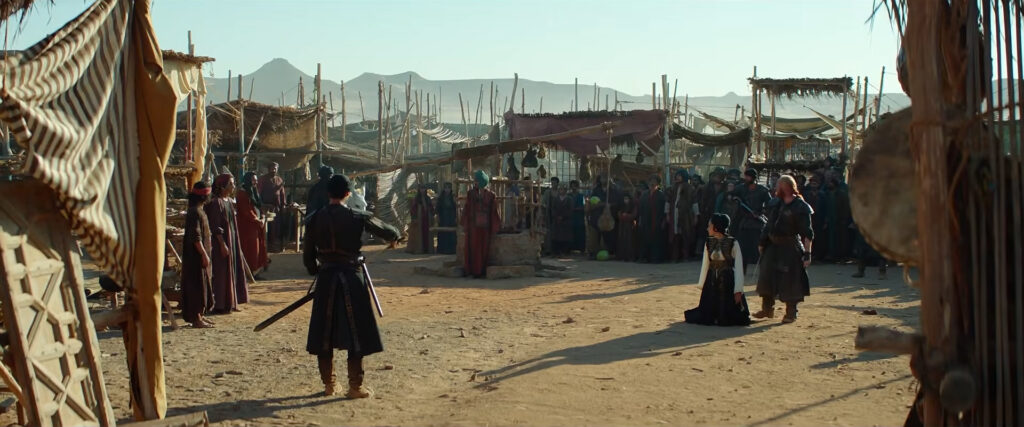
Set in the dusty deserts of 7th-century Arabia, the story revolves around a resistance against the oppressive rule of the Persian Empire. The ruthless Emperor Kisra demands that Arab kings send their daughters to him as concubines. When Princess Hind and her father defy this order, they are relentlessly pursued by the Emperor’s brutal commander. Just as they are about to be captured, Hanzala, played by Anthony Mackie, a cunning and free-spirited desert rogue, intervenes.
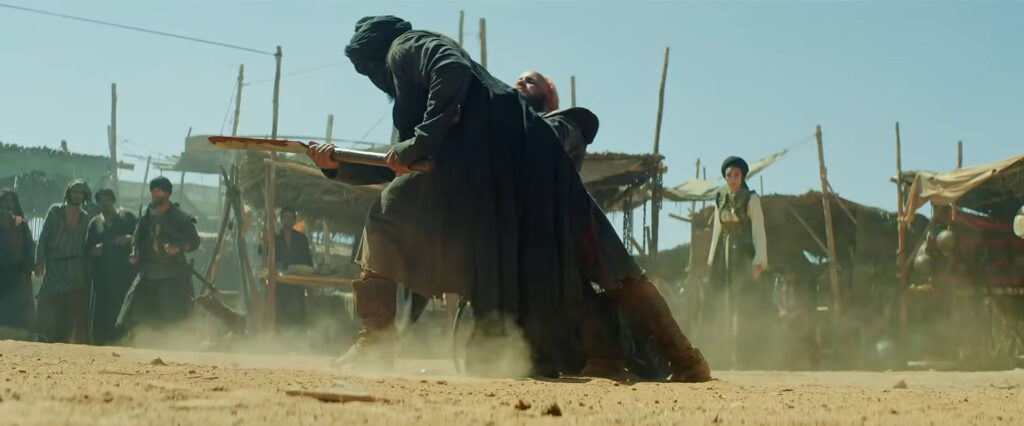
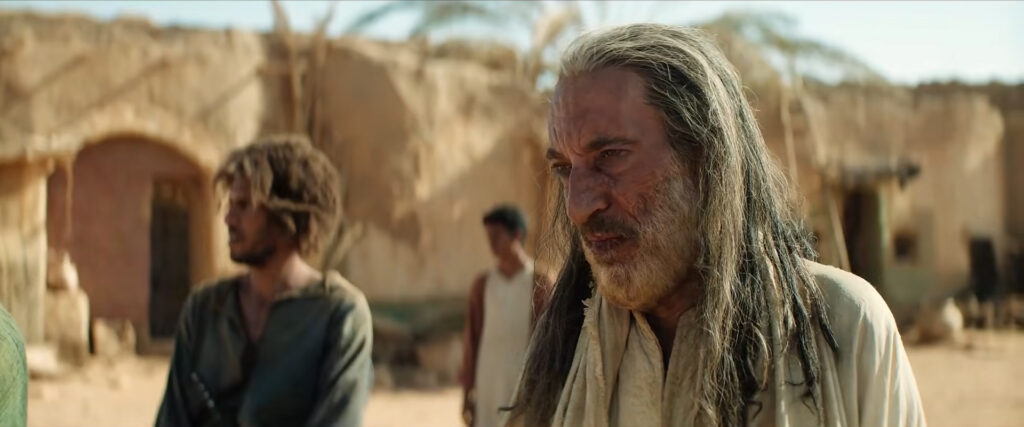
Despite Mackie’s prominence on the poster—where he appears alone beneath the bold title Desert Warrior—the titular “warrior” is not actually him. In the film, Mackie plays a secondary figure: a roguish outsider who initially helps for money but later joins the rebellion out of conscience, serving as both ally and mentor. The marketing choice is clearly tied to his star power. Ben Kingsley also appears in the film, though he no longer seems to possess the kind of draw that alone can bring audiences into theaters. That said, seeing Anthony Mackie in authentic desert attire was genuinely exciting—and that excitement is not misplaced. He delivers a strong performance, as he almost always does.
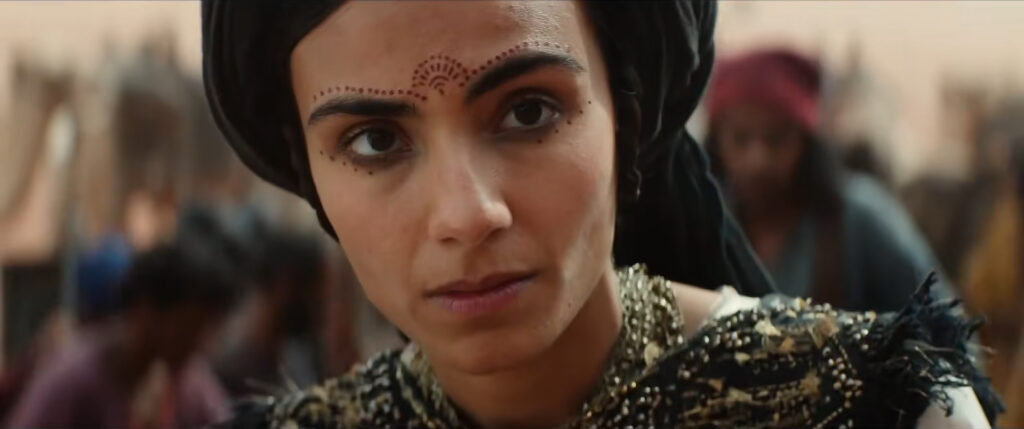
The true “Desert Warrior,” in fact, is Princess Hind, playted by Aiysha Hart. Following her father’s death, she rises to leadership, unites the tribes, devises strategies, and commands armies in an epic battle. The title clearly points to her—a narrative of a woman’s emergence in the desert and her transformation into a warrior. For a Saudi production, this is, on paper, a commendable thematic choice. Yet in practice, her being a female leader adds very little to the film. The story constantly pushes toward a kind of Mad Max-style desert spectacle, driven purely by relentless action. Beyond that, it has no real purpose or deeper concern.
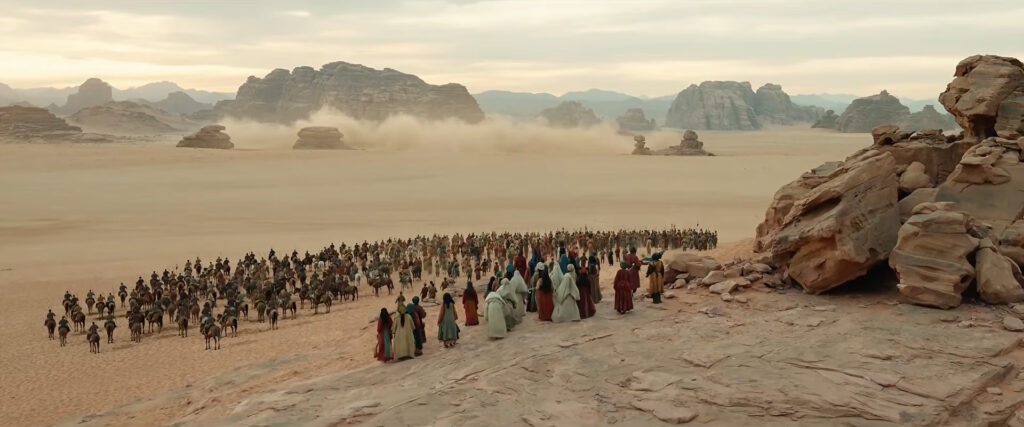
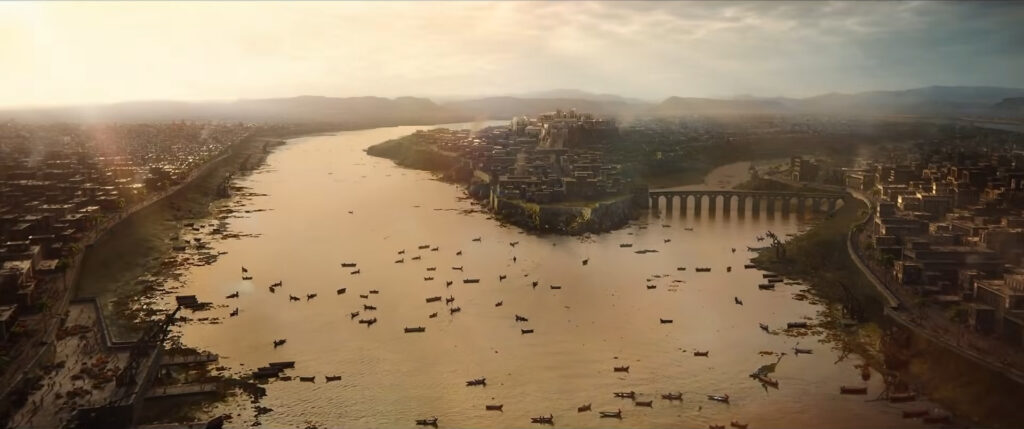
As the most expensive film ever made in Saudi Arabia, Desert Warrior places little importance on its story. Its sole focus is on creating a grand visual spectacle—and to be fair, it succeeds at that to a jaw dropping degree. The entire film was shot on location in NEOM’s Bajdah desert and the Tabuk region, avoiding the artificiality of green-screen environments. The production design is genuinely impressive: vast tent cities, detailed villages, and striking visual compositions.
Over ten thousand extras were used—something rarely seen in contemporary cinema. Its cinematography and colour palette are particularly noteworthy; in a global film landscape increasingly dominated by muted tones, this film stands out with some of the most vibrant colors I’ve seen in recent years. It is, undeniably, mesmerizing.
But as I’ve said, because the film invests all its energy into building a visual world, it ends up with a suffocating screenplay that feels like being stranded in the desert without water—and an equally disjointed narrative that makes you feel lost within that same desert. There is no emotional depth. The characters are shallow, their actions unconvincing. The film has nothing meaningful to say on a moral level. Despite the inherently compelling premise, you never fully connect with the story, and instead find yourself adrift within its fragmented structure. By the time you leave the theater, the only thought that lingers is: at least I got to look at some beautiful desert landscapes.
That concludes our review of Desert Warrior
Did you enjoy the article? Let us know in the comments down below!
For more episodes of More Movies Weekly as well as our other shows and podcasts, be sure to check out the Podcasts page on our website.
Remember, you can have a choice of what films we review on our Weekly podcast by joining us on Patreon here.
Please join us on social media on Bluesky, Instagram and Facebook. We really appreciate all the likes, shares, retweets etc., and we would love to hear from you and continue chatting about all things cinema on these platforms.
If you love to watch videos on YouTube, then please subscribe to our channel here. There’s lots of fun and informative videos uploaded that we hope you will enjoy!
We have a passion for movies and aim to produce entertaining and informative movie-related content. It certainly is a lot of hard work, but we love films so much that it’s worth all the effort. We have to keep the lights on and make sure we have plenty of caffeine to keep all of the articles, videos and social media posts coming, so if you like our work, then please consider supporting us at Buy Me A Coffee here. You can also become a More Movies patron on Patreon here.
To help support us here at More Movies, we do use advertising in a few places and we try our best to make sure they are not intrusive or aggressive, so we appreciate it if you do not use AdBlockers on our site. Who knows, you may actually see something you like!
We are also affiliated with Funky T-shirts so be sure to check out their range of cool t-shirts which include categories Film & TV, Slogans and Retro Comics!