
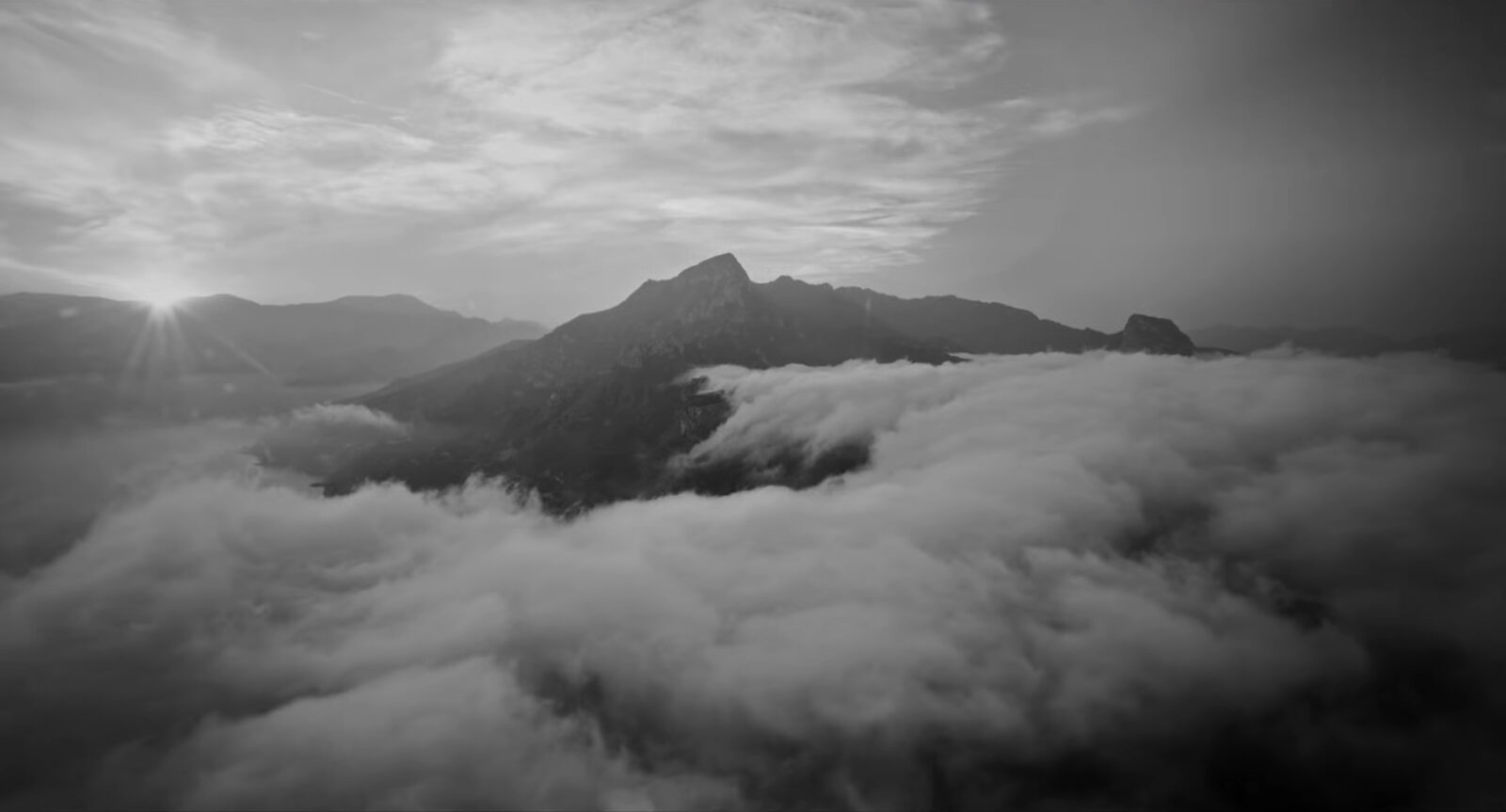

Set in Naples beneath the constant threat of Mount Vesuvius, Gianfranco Rosi’s documentary Pompei: Below the Clouds (2025) leans into stillness and long takes, offering striking black-and-white images and rare, powerful moments—though its distance and silence won’t work for everyone. Guest writer Deniz Arslan shares his thoughts on the film…
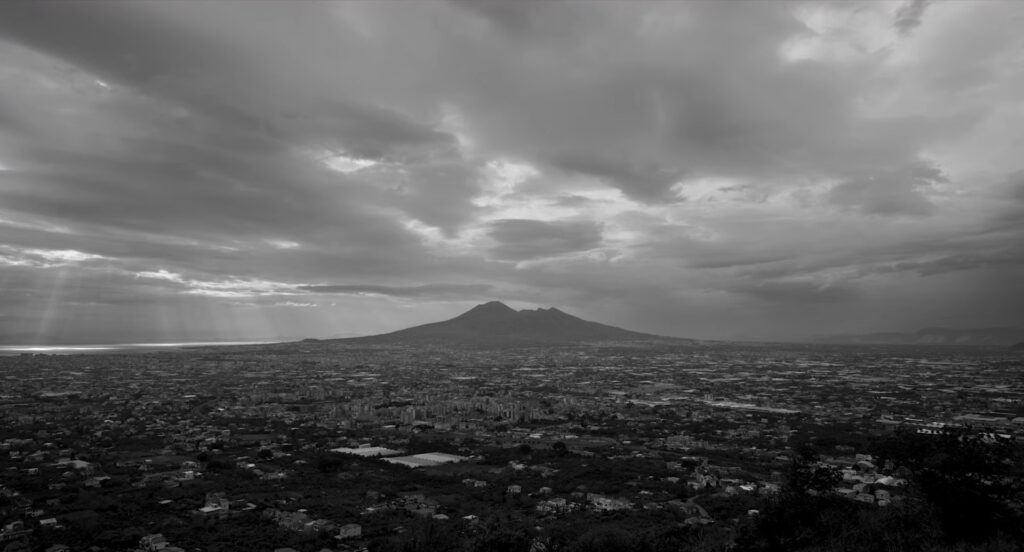
After documenting Italy’s daily life, its problems, and social realities in Sacro GRA (2013) and Fire at Sea (2016), Gianfranco Rosi returns with Pompei: Below the Clouds, a documentary once again set in Italy, focusing on the everyday lives of people living under the shadow of a volcano that could erupt at any moment. With this, we now have something that can be called Rosi’s “Italy trilogy.”
The last time we watched him was in 2022 with In Viaggio: The Travels of Pope Francis, a touching and very enjoyable documentary about Pope Francis’ visits to different countries. However, since that film consisted largely of archival footage, it did not fully reflect Rosi. His approach is more about long takes that resemble a living photograph, and a stillness that offers us the chance not to be told something, but to witness something. There is plenty of that in Pompei: Below the Clouds.
I watched the film early in the morning as part of the Istanbul Film Festival, together with a small handful of critics. Meanwhile, the screening of Steven Soderbergh’s The Christophers (2025), which started about half an hour later, was completely packed. That, I think, was a detail worth mentioning.
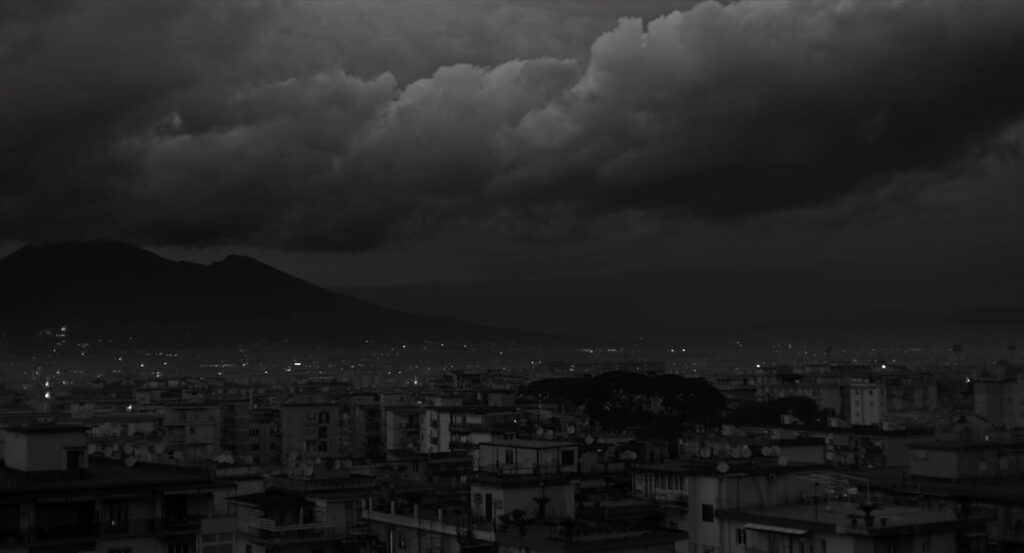
After watching the film, I felt the need to take another look at what had been written about the documentary in the press notes. And at that moment, I realized that it might be possible to compare Pompei: Below the Clouds to Lars von Trier’s Melancholia (2011). There, we watch the story of helpless human beings, living their final days under the presence of a rogue planet approaching on a collison course with Earth, moving inevitably toward an unavoidable fate. Here, similarly, we are presented with the lives of people in Naples who live under the constant threat of Mount Vesuvius erupting.
Of course, it’s important to underline the word “tell.” Because whether as a deliberate choice, or as a clear shortcoming, Pompei is very reluctant to tell you anything or to express what it wants to say. I’m not saying it is unsuccessful — I’m saying it is unwilling. Just like in his previous works, Rosi places you among people and within a culture that is foreign and leaves the task of understanding, internalising, and making sense of what you see, entirely up to you. As I mentioned, I was only able to make sense of what I saw after reading extensively and doing detailed research on the subject.
Anyway, we were talking about the psychology of people living under the constant threat of a volcanic eruption. In fact, this is something we know very well as the people of Istanbul, the city where I watched the film. Because Istanbul lies at the western end of the North Anatolian Fault, beneath the Sea of Marmara. In other words, the earthquake risk is quite high. But that is not the striking part. Istanbul has a population of nearly 20 million.
If you have ever been to Istanbul, you may have noticed that its neighborhoods and streets are built on steep hills, forming a dense, almost labyrinthine structure when viewed from above. Moreover, millions of buildings in Istanbul are not resistant to earthquakes, and people continue to live in them fully aware that even a small tremor could bring their homes down — living, so to speak, inside their own coffins.
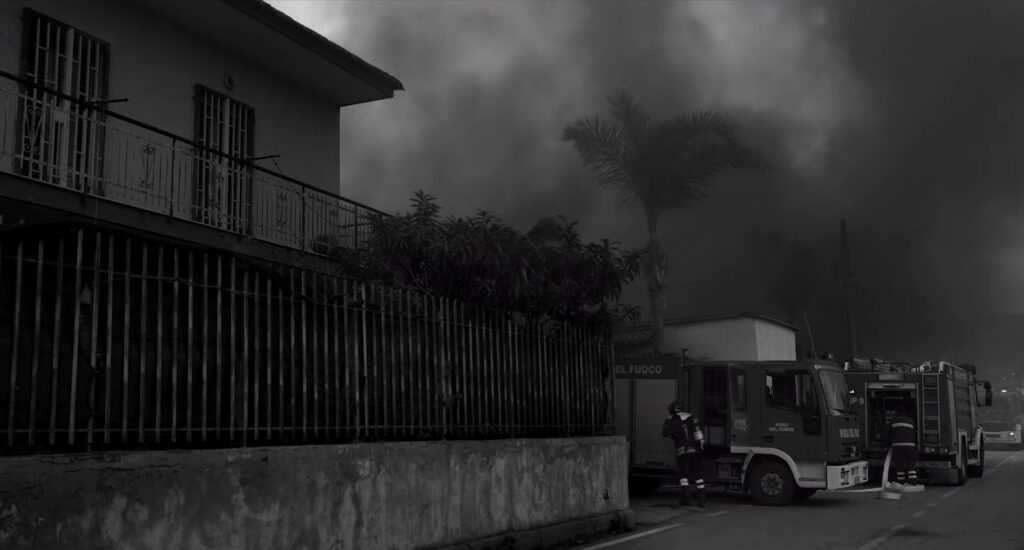
Therefore, for me, this was the most striking aspect of the documentary. In one scene, a person who is terrified after a magnitude 3 earthquake calls the emergency line and, with a trembling voice, asks whether it could trigger the volcano. I understood very well what they were feeling. However, I seriously doubt that everyone will experience these emotions in the same way, because as I said, with its long takes, long silences, and slow pace, I am not sure whether this documentary can convey the same feeling to everyone.
As a conscious and artistic choice, it moves away from classical narrative structures, and I cannot blame it for that. But at the same time, with this choice, a clearly noticeable narrative gap emerges, and that should not be denied. After all, this is not a modern art painting where we are expected to derive our own meaning from brushstrokes and lines.
What we are watching, even if it comes through the director’s camera, is ultimately real life recorded on film. And the role of the filmmaker is to treat real life like a canvas and, through the possibilities of cinema, tell its story in a more striking way. Yet while watching this documentary, you often find yourself thinking, “It’s beautiful to look at this black-and-white imagery. But I wish something would happen.”
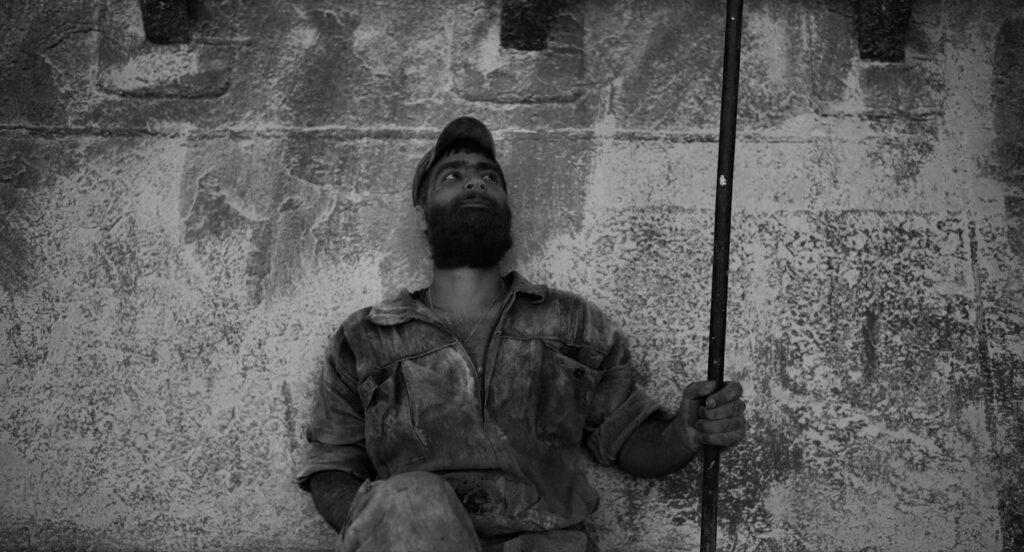
In fact, in the scene where Syrian ship workers are exercising, one of them hits their head on a gym machine, which caused small bursts of laughter in the theater. I think it was a moment that perfectly captured the audience’s desperate expectation for something — anything — to happen.
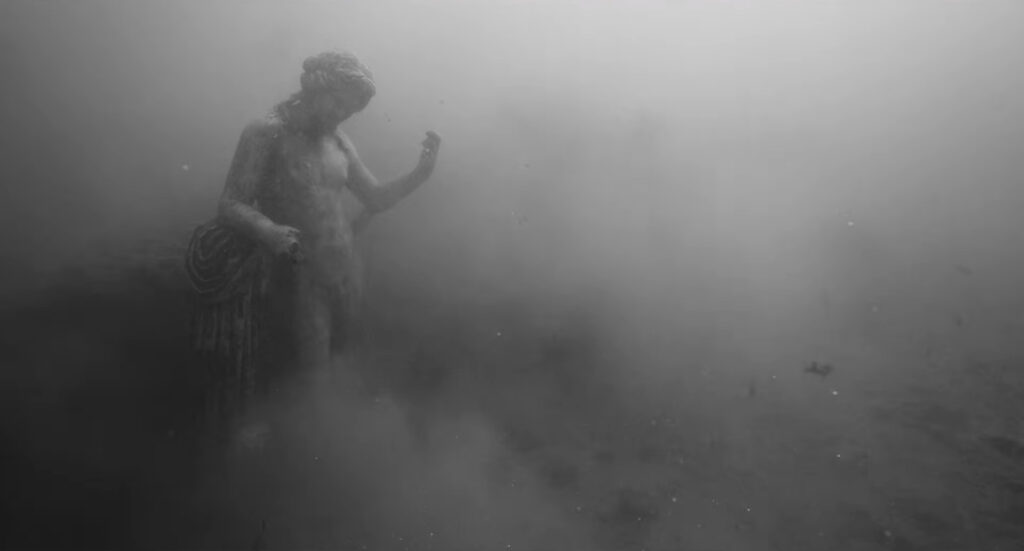
Finally, regarding the visuals, I want to say this: most of the time, this film behaves more like a photograph than a documentary. Rather than fulfilling the qualities of a documentary, it often feels as if you are looking at a living picture. For those who are interested in black-and-white photography, this is appealing, but for someone watching a Rosi documentary for the first time, it might be advisable to be prepared. Still, as I said, the cinematography is, in one word, mesmerizing. Especially in the final scene, the images of statues lying at the bottom of the sea felt like pages from a sacred book. Breathtaking.
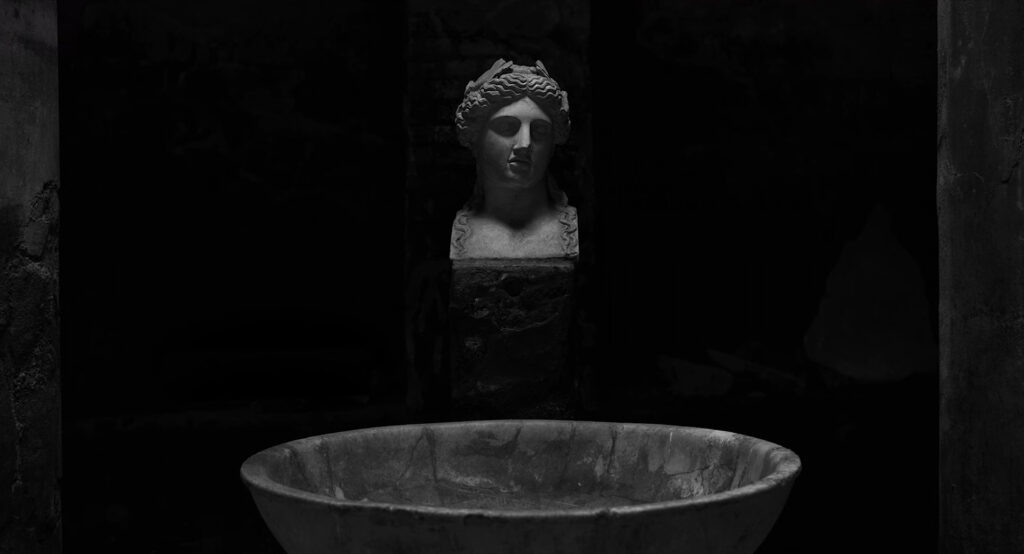
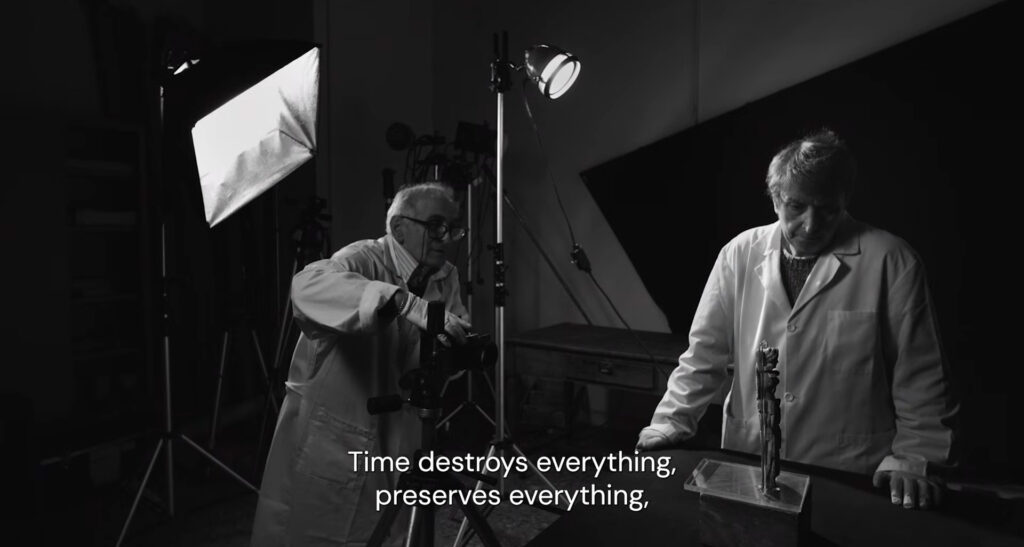
The rare moments in which the film includes longer dialogues are probably its strongest. In one of these, a museum curator working in the vast archives of the Naples National Archaeological Museum walks through the space while talking about life, delivering almost biblical, spine-chilling words. She says that she has started to see the sculpted heads — some waiting to be exhibited, some that may never be — as her friends.
Because these moments appear rarely, and the rest of the film is so quiet and without dialogue, they stand out much more powerfully and multiply the impact of what is being said. As she walks among the statues, she speaks in a calm and poetic tone about layers of time, destruction and preservation, and how the past seeps into the present. One of the most striking lines she says is: “Time destroys everything, preserves everything, and then returns to us in an unexpected way.”
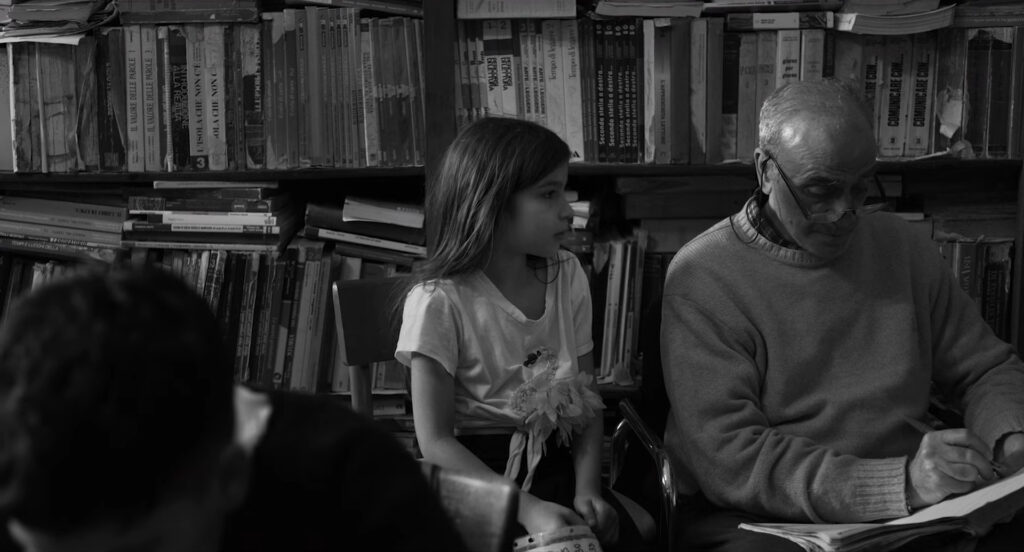
The people of the city live under the threat of a volcano ready to erupt, and yet life continues. We see different parts of society — a private tutor teaching students, archaeologists working on excavations. But in my opinion, the moments that best capture the traces of everyday life are the scenes where we witness calls coming into the emergency call center. A woman who rings after being frightened by a recent earthquake says, “How do they want us to die — by earthquake or by war?” This outcry against the current state of the world we live in feels very real.
As much as I might be unfair to this documentary by saying it does not tell much, for those who want to understand, there are actually dozens of these moments hidden within the ordinariness of everyday life. “Want to understand” may not be the right phrase. I think the right words here are “be patient.” Because with its slow pace and silence, this documentary seriously tests your patience.
This review was written following its screening at the Istanbul Film Festival. Pompei: Below the Clouds is currently available on MUBI.
That concludes our review of Pompei: Below the Clouds
Did you enjoy the article? Let us know in the comments down below!
For more episodes of More Movies Weekly as well as our other shows and podcasts, be sure to check out the Podcasts page on our website.
Remember, you can have a choice of what films we review on our Weekly podcast by joining us on Patreon here.
Please join us on social media on Bluesky, Instagram and Facebook. We really appreciate all the likes, shares, retweets etc., and we would love to hear from you and continue chatting about all things cinema on these platforms.
If you love to watch videos on YouTube, then please subscribe to our channel here. There’s lots of fun and informative videos uploaded that we hope you will enjoy!
We have a passion for movies and aim to produce entertaining and informative movie-related content. It certainly is a lot of hard work, but we love films so much that it’s worth all the effort. We have to keep the lights on and make sure we have plenty of caffeine to keep all of the articles, videos and social media posts coming, so if you like our work, then please consider supporting us at Buy Me A Coffee here. You can also become a More Movies patron on Patreon here.
To help support us here at More Movies, we do use advertising in a few places and we try our best to make sure they are not intrusive or aggressive, so we appreciate it if you do not use AdBlockers on our site. Who knows, you may actually see something you like!
We are also affiliated with Funky T-shirts so be sure to check out their range of cool t-shirts which include categories Film & TV, Slogans and Retro Comics!